Saturday, October 4, 2025

Frying pan to Continental?

Do I have something here? I want to convert people from the frying pan serve to a continental grip serve. When people serve frying pan style, they face the net and the strings face the net. When we serve continental grip style, the strings still face the net, but we face the net post. The arm makes the same motion, but it’s just in a different direction.— frying pan serve: toward the target. Continental grip serve: toward the net post.

How do you convince people that they don’t need to see the target or have it in front of them to serve the ball? Do we use the allure of spin and its possibilities? How do I prove that? Must I find somebody who can hit a frying pan serve reliably and have a serving competition with him/her?

Perhaps the serve is just badly taught. Instead of working sequentially from the ready position, we could teach backwards from ball contact and slowly add the preceding pieces. Right handers will stand in the doubles lane, 3 feet from the net, by the right net post and facing the net. They will swing toward the net and strike the ball using a continental grip with the strings facing the deuce service court.   The next step: have them add power to the ball.

Next: move away from the net about 6-7 feet and repeat. Have them make a mental note of where the ball is in space when they hit the ball best.

I sometimes see: people facing the court, but using a continental grip to serve. They’re convinced that they’re trying to serve “properly”.

Friday, September 12, 2025

tennis serve aha moment

While serving tennis balls, I felt strain on my forefinger and wrist. I diagnosed that I was manipulating the racket with my hand and fingers. I relaxed my hand and fingers letting just  my elbow and shoulder bring the racket into the overhead loop. Once that became familiar I felt less like a beginner. I think beginners move more with their hands, so they get less power and maybe injure themselves more. 

Now if I can remember what that feels like and execute the next time out, I’ll believe I’m improving. 

Monday, September 8, 2025

Tennis lesson: serves and wall

 Wall practice: five balls. Rest.  Work on ONE thing. 

  1. Alternate left/right. 
  2. Finish with flashlight (butt cap) pointing up
Serves. Work on walking into the court. Right foot moves into pinpoint. Left foot steps into court with impact. Keep walking. Don’t jump yet. Roscoe Tanner didn’t. Rod Laver didn’t. 

Monday, September 1, 2025

Today’s tennis lesson

Forehand against the wall. Stand  back far enough for let the ball to bounce twice to have enough time for follow through. 

Finish with the racket butt cap pointed up to the sky. 

Serve: look for the seams of the ball. Lift the ball and wait to begin racket arm motion. Jannik Sinner’s racket arm is still down as the ball is at head level.  Look at the target then look at where the ball needs to be at contact. No need to watch ball as it goes up. 

Wednesday, August 27, 2025

Done with the J toss

I  gave this toss a try for many months, but I just couldn’t get the ball positioned far enough over the baseline to help my serve. It was Ryan’s (2minutetennis) idea.  John at Performance plus Tennis said don’t use that toss—I wasted so much time. 

Sunday, August 24, 2025

Intermittent serve mojo

Wish I knew how to call up my serve mojo when I have a real human on the other side of the net? Something happens in my brain to make me try too hard. My serve is just a tiny blossom now so maybe I’ll just have this issue until it has more exposure to humans?

Case in point: after an awkward bunch of serves to a friend, I returned to the court alone and about four balls later I felt very comfortable and connected.


Trying to recall my approach after returning to the court. Maybe I could relax more and work my way up to a place where I felt comfort. 

Friday, August 8, 2025

What serve do you want

 Practicing some serves. Not really getting the ball high enough or into the court enough to put them in consistently. The problem was trying to hit flat when I should’ve been more focused on hitting slice. Recreational players like myself are still trying to swing toward the target instead of away from the target to create spin. Once I can remember to spin the ball, I become more consistent, slicing it rather than hitting flat.

I was hitting slices and not really conscious of having made a decision to do that. When I began hitting flat, I started missing long and into the net—again I had made no conscious decision—balls were flying in a flat trajectory. I have to  decide whether to flat kick or slice and where in the service box. It isn’t enough to hope the ball goes into a 13.5’x21’ rectangle—I have reached a level where that is actually possible. 

Thursday, August 7, 2025

Serve rock

 I asked Ryan in the 2minutetennis weekly group Zoom class what can I do at the beginning of each stroke that will help ensure all the checkpoints fall into place without thinking about them?

Answer for groundstrokes And Volleys: Keep your elbows out.

Answer for serve: Rock forward and back before starting to serve. Some servers were even lift the toes at the front foot if not the entire foot when beginning the service motion.

I tried that today. It worked but anytime I try something new it works for maybe 30 to 45 minutes. The next time I go out, I either forget something or else it just plain doesn’t work.

Tuesday, August 5, 2025

Initiate tennis serve with shoulders/elbow?

 I shot some video yesterday of myself trying to execute serve checkpoints laid out by various YouTube channels. One, to have my right elbow lined up with both shoulders, (I’m right handed.) I failed at after multiple attempts, by which I mean, 50 serves. I also tried knocking off the birthday hat as recommended by Ryan at 2minutetennis.  I wasn’t wearing the birthday hat. When I wore the birthday hat before the racket would sometimes hit the top of the hat and push it back away from my face. A lot of serves went in, but I should’ve been paying more attention to my technique. I often forget: pay attention to technique and how the strings contact the ball— the ball will take care of itself. Trust the process—the ball just goes in. 

How would I get y elbow in line with my shoulders? Before this morning, I thought about how I moved my racket when serving. My brain had sent instructions to my hand to move the racket; the elbow followed or just did some random thing. The change for the morning: Initiate movement with the shoulders or the elbow. I also remembered what Ryan had said about “elbowing the enemy” with my elbow and pulling it back to line up my elbow and shoulders. At the same time, I wanted to tilt my shoulders so that I could set up the shoulder over shoulder motion of the serve, as if performing a cartwheel. I also noticed that on some of the serves, I was hitting them flat, when I really wanted to hit a slice serve. That meant having the strings face the target while swinging across the back of the ball.

How was I going to make my serve better? I really needed to bounce the ball a few times and decide how I wanted the ball to move after contact. Did I want a slice or did I want a flat ball? Did I want to hit a kick serve? where did I want the ball to land? Could I place the ball there? How fast was I going to swing? Where was I going to make contact with the ball?

I resolved that I should execute several practice swings before serving every ball. Maybe even use a fake toss before hitting balls, (tossing the ball so far out of range I’d have to take two or three steps to reach it). I want to see how this goes

Friday, October 13, 2023

Text spam

 I gave money online to a few political candidates. In the process, I gave my telephone number. Lately, the number of texts being hit money from political actors associated with their parent organization has increased to maybe six or seven a day. Most texts ended with "Reply Stop to end”—that did nothing The organization put my name in an account that I could manage.  Once, I tried to stop the texts by deleting my phone number—nothing changed. 

I went back to my account profile and added a random phone number. The texts dwindled to one a day and recently to none. 

Thursday, July 6, 2023

Racket as a weight vs tool

Posted to Tennis forum

One of my favorite YouTube channels is Feel Tennis Instruction. 

Over the past year, I’ve watched the videos “The Most Fundamental Tennis Serve Drills” and "Swing A Tennis Racket Like A Weight Instead of Using It Like A Tool” several times. Given example of weight: a heavy backpack. Given examples of tool: pen, phone, scissors, dinnerware, corkscrew. To swing the backpack, I’d need to use more than just my hands or arms. The tools require the precision of hands and fingers and no torso movement. 


My take home lesson: use the racket like a weight in serves and groundstrokes. With volleys and slices, use the racket somewhat more like a tool with a firmer grip. 


I put eight balls in a plastic bag as directed and swung it around, learning the loops of the service motion. After blowing out a few bags, I ran a cord through the balls and kept swinging.  I tried to transfer that motion to my serve. Because the eight balls weighed 16 oz and my racket only weighed 11, I didn’t feel the racket as a “weight” so I took off two balls. I could probably pull off another ball, but the effect of feeling the racket as a weight was already much greater. 


The next step, was hitting a ball without going back to “tooling” the ball. While trying to feel the racket swing my goal was to swing relaxed and toss the ball so that the ball would just “happen to be in the swing path.” I may be getting easier power, though I think consistency comes from understanding how the racket needs to orient relative to the ball position. I don’t have a coach nearby that that can help with this so I’m making slow progress but it improves over just hitting boxes of balls. The challenge is trying to remember my goal and not fall into the rhythm of hitting balls. 

Thursday, June 29, 2023

No-ad tennis games with Tony

 We each warmed up hitting balls against the wall and agreed to play some games. No-ad games. First player to score 4 points takes the game.

I don't think we were evenly matched, given Tony's much more extensive, though distant, experience. When we finally stopped after maybe 75 minutes, we each  had won close to the same number of games. Luck is always a factor. 

After playing, I was glad not to have played doubles. It could have been the no-ad format, but I had low anxiety about losing points by double faulting. I didn't feel like I wanted to hit winners against two people on the other side of the court. Maybe I didn't have the anxiety of letting down a doubles partner. Whatever the cause, I had less anxiety about hitting balls and could feel myself paying more attention to the ball, my footwork and how I swung at the ball. I had plenty of moments where I had no sensation of myself, but it wasn't on all points. If I hit a short ball on which Tony could finish the point, I didn't try to run down the ball, nor did I feel bad. After almost four years, maybe I'm learning something. 

Before quitting, we played mini-tennis for three minutes, during which I felt a greater connection to tennis than before. I could control almost 80% of the balls I hit, dropping them in the service box and achieving some accuracy. Tomorrow will be another day, though.

Wednesday, April 5, 2023

Pickleball then tennis

 1.5 hours of pickleball this am. The whole court is 44' long and 20' wide. 

It's really hard to lob over anyone and not hit long. Should probably practice lobs, but doing it during games and not getting it deep enough invites smash responses. My operating theory for now is to hit them higher and shorter to keep them in. Timing would be a challenge for returning a high lob.

I'm having fun slicing back serves. Many rallies finish as the serving team often hits those into the net. I don't know how I'd handle one of my own returns, as almost no one else does it.

The dink (drop shot) is an art form. It takes serious concentration on the racket-ball contact. A touch deep or high and an opposing player can drive it back for a winner.

The pickleball group here has an aggressive schedule coming up. Three meets in five days.

I don't think it hurts my tennis game. My tennis game has its own load of issues. Ha

Tennis in the pm. Machine balls are easy, if I let myself camp at just the right place so I never have to move. I help myself if I plant myself squarely in front of the machine and skitter back diagonally to hit. I still must consciously tell myself how to do the unit turn. I forgot to check if my chin was on one shoulder to start and the other shoulder after the contact. Having intention for where to hit the ball is easy against the machine, but almost impossible when hitting with another player. Keeping a relaxed grip and a high rear elbow: still a challenge.  Leading with the non-hitting arm: also difficult to remember. Throwing vs pushing the racket: hm.

Had to stop playing tennis after 90 minutes due to mental fatigue--inability to concentrate on technique. This is how beginners and intermediate players struggle to improve.

Monday, April 3, 2023

Tennis lesson for Tom?

 Tom had an appointment for a lesson with a tennis coach yesterday. What happened? I didn’t ask and Tom didn’t offer. I’m guessing that it didn’t excite him enough to talk about it.

I was hitting balls when he came to the courts with his racket and two hoppers of balls. 

I can’t recall who asked who if they wanted to hit balls, but if I asked, it was one of those courtesy things you do involuntarily. We hit for about forty minutes. My footwork wasn’t great so I didn’t always get the best shots. I still have to consciously remind myself of technique points while hitting. I get lazy if we’re only using half the court, so I suggested using the whole court, thinking I’d want to chase balls more. I still struggle to recognize short balls, and Tom hits many of those, so I adjusted my bias to move forward more. After I quit, I watched Tom hit machine balls. He camps about 6-10’ behind the baseline hitting balls thrown by the machine from the baseline at the other end of the court. For most balls, he started his take back after the ball bounced. If he had that tennis lesson, a more timely take-back wasn’t his homework assignment. 

It’s really hard to learn new habits—the old ones have a tenacious hold of us. When I started playing in late 2019, I never even thought of that aspect of human nature, so I didn’t take lessons. I must have thought my tennis from the 70s was a good enough foundation. I had an old school forehand with a  Continental/Eastern grip and I hit with my arm.  That may have made learning the modern forehand more difficult.  And performing a shadow swing of the modern forehand is easy—if I never had to hit a ball, it would always be perfect.  Add the ball, and my ancient muscle memory kicks into high gear—good luck finding the modern forehand. It takes tremendous mental energy to lead the stroke with my non-hitting arm. It’s exhausting!

I can understand if Tom doesn’t want to replace old habits with new ones. It’s difficult. One has to consciously fight old habits—mental fatigue develops. Unfortunately, better results (hitting the balls in the court consistently) don’t come without hard work. Doing the same thing over and over is easy, but it is magical thinking (or insanity) to expect different results. 

If listening to jazz music makes you not want to improve your tennis, turn the volume to minus four, please. 

Tuesday, August 16, 2022

The Country Living Grain Mill, motorized on the cheap

 The country living grain mill is the Cadillac of grain mills. It's only drawbacks are: it’s a fully manual grain mill and it costs $500. After you spent all that money, you really don't wanna spend another $500 for the motorization kit. Well I started searching on the Internet and on YouTube for a cheaper alternative. I found a clip from YouTube's Cincinnatus Again channel using a 12 volt windshield wiper motor mounted directly to the shaft of the grain mill. I tried that, but failed probably because my power supply was rated at only 5 watts. The power supply didn't drive the mill when using a 3" pulley to drive the larger 12" pulley on the mill. I bought a power supply that was rated at 360 Watts for about the same price (amazingly). I mounted the motor on a hinged board about 15" away from the mill, allowing for wobble from an imperfect attachment of the pulley to the motor.

Final result is a kit that runs the mill at 27 RPM, well below 100 RPM, the mill maker's upper limit for keeping the mill from wearing out and for keeping the flour from heating up (and losing nutrient value). Here is a link to the video I made of the motor kit, or view it below.


Parts list:

Motor US$25-40 new at eBay (or amazon). Mine was spec'd for a VW Jetta. Unloaded, it ran at 120 RPM--that speed changes with a load. The motor runs hot to the touch after grinding about a cup of grain.

power supply $21 at Amazon.

v-Belt $8

power cord & plug (from extension cord) $2

Power strip with on/off switch, $6

hinge $2

board $2

wire $2

Motor mount, welded from scrap metal and drilled for the motor, free

3" pulley, $10 from Amazon. Different sizes will work. Anything from 1.5-6" will work fine. Prices vary depending on size and the phase of the moon. 


Monday, June 27, 2022

Tennis obsession and breakthrough?

Someone has commented on a tennis video, “swing fast, not hard.” I dimly recall “liking” this comment two months ago.  I’m only now beginning to swing fast.  Swinging hard–that’s like hitting flatter, hitting into the ball and swinging into the court. I’d strung my racket to 60# hoping to keep balls from flying over the baseline—I’ve begun to swing over the back of the ball, finishing high and catching the racquet over my left shoulders. I thought I was already doing that, but this week it feels different, though I don’t know what it looks like. 

Swinging fast with lower string tension will do what: balls spin more or sail long?

Re the type of strings and the tension of those strings. A full bed of polyester might go “dead" in under ten hours of play. 

Next, does a lower strung racquet have less control?

I restrung the racquets at 50 lb. The Racquettune app on my phone said the stick strung with poly was 43.3# while the one strung with a multifilament read 50#. Weeks later they’re at 38 and 43 lb. Both racquets play very differently from when they were strung at 55-60#. I could put more spin on the ball because it didn’t jump off as quickly and I really felt like the ball was on the strings longer. Am I getting better or is the racquet strung more appropriately for me? 

April 1, 2023.  64° in Vegas yesterday and sunny—tennis with Tom.  I was huffing and puffing all over the court chasing down errant balls. I finally saw Tom, in his sweatsuit, barely breathing more than a hibernating bear. I asked, “why aren’t you winded like I am?” 

Tom: “I’m not moving very much.”

Me (thinking): “Yeah, you have a static ready position on your heels, you don’t split-step, you don’t chase down balls and you look like you’re here to do community service as punishment for some crime.” 

I refrained from cruelly suggesting that he play golf instead of Tennis. 

I watched him as he picked up balls—he was walking pretty slowly.  (The beat of a different drummer?) He was framing 80-90% of his volleys. 

I had theories about those things: He doesn’t want to play with me and only came out because he can’t bear the idea of offending me.  His thyroid has dropped out of gear. He’s still on Standard Time. He had a bad night. He has psychic pain. His joints hurt. Listening to jazz makes people sluggish. He needs a Tony Robbins refresher seminar.  He needs Tennis lessons. He needs golf lessons.  Maybe this is who he is now. 

Tuesday, April 5, 2022

Mini-tennis anyone?

 Tom loves to hit tennis balls, but no one knows the psychological reason. He doesn’t like or dislike playing points. He has a deer-in-the-headlights look on his face when a ball lands short and bounces a second time or when a ball lands more than two steps away. He’s often said he doesn’t want to play games or sets—he just “wants to rally.“ I’ve sent him links to YouTube videos to help with various aspects of tennis, but he seems to have absorbed very little. “I’ll get better if I practice” he says.

Tom got me interested in tennis in late 2019. I played in junior high school and had fun, but stopped. I couldn’t hit the ball well and I wasn’t having fun. Lessons were expensive then. Now we have dozens of YouTube tennis channels that give out free technique that I can watch many times over. I video myself hitting balls so I can discover what I’m doing or not. 

Tom likes to play mini-tennis for 15-20 minutes and then go right to the baseline rally full court. He says it warms him up and says Joe and I are the only people he knows that will play mini-tennis for two hours. I must have made him do that yesterday for 40-50 minutes. 

Today I said I would skip mini-tennis, because it wasn’t helping my full court rally. I insisted on starting full court. I said, you’re a lot better than I am, so you don’t need that.  After twenty minutes he complained that he wasn’t warmed up. I said it didn’t seem to affect his tendency to start rallies with the ball flying far to either side of me. I offered to stand in the ad court if he’d hit there. (If he saw that as a cruel remark, he didn’t let on). Eventually I relented and we played some mini-tennis.

We each stood 8-10’ from the net and volleyed. After a few exchanges, he asked, “is this supposed to be aggressive?” Me: “it would appear that way if you sit on your heels and don’t split step. I’m just hitting volleys." 

I blandly suggested that he take lessons to at least learn to start a rally from the baseline. He doesn’t want to pay for lessons. I can teach him to do that by using his ability to start rallies from the service line and move him back five feet at a time. 


Wednesday, March 23, 2022

Tennis Choke

 Tennis with Jennifer, Jay and Jonathan. Jonny said I was moving forward and hitting, that I should have split step and hit the ball from a stable base. Jay  said I didn’t execute my forehand stroke well—swing path and follow through deficient  

I know where my body parts are when hitting. I have anxiety related performance failure. Funny that I only had one double fault while serving, I’m sure because I have total control over the point as server. 

Resolved, practices should include playing points, maybe four by each player. We should then progress to playing games. 

Tuesday, March 22, 2022

Insanity and learning tennis

Hitting tennis balls with Tom. I said I created a spreadsheet to calculate the lowest percentage of good serves one could hit and still win a game. 31.25% if you only played through one deuce score, and the more deuce scores played in a game the closer one could approach a low of 25%. Tom didn’t comment, if he was listening.  

I pointed out a technique to improve his aim on groundstrokes, which he found helpful. After an hour of hitting,I prepared to leave. I watched as Tom hit over 75% of serves out. 

Me: is your serve improving?

Tom: it could be better

Me: I thought you just liked to knock the felt off the balls.  how would it be better?

Tom:I want a better toss. 

Me: when you have a better toss, does that make anything else better?

Tom: it’ll make my serve more consistent

Me: YouTube has a bunch of great instructions for that. I’ve sent you links before. The tip I gave you today came from YouTube  

Tom: I’ll get better if I just practice

Me, thinking: the definition of insanity, doing the same thing and expecting different results.

Me, aloud: okay, see ya later!


Wednesday, December 8, 2021

Making a DIY Topspin Pro

 Making a diy Topspin Pro for Tom.


The Topspin Pro is a great tool for adding topspin to tennis groundstrokes. I bought one for myself using Ryan Reidy’s affiliate link, but thought I could make a second one from stuff laying around the shop for my brother Tom (a Topspin Bro!). A paint roller handle holds a tennis ball that spins on impact; the handle can swing forward when the ball is struck. The square tube inserts into one leg (a round tube) of a tripod and can be adjusted up or down. 


Materials:

Square 1" aluminum tube 

24" PVC pipe (1.5") that fits over the aluminum tube

3-4"paint roller handle

44" ¾" PVC pipe

Epoxy (Bondo auto body filler, though really stinky, might work)


The tripod section of the stand. The main section is hollow so that it can accept the square tube holding the ball. I'm using 1.5" PVC/ABS pipe because I already have 1" aluminum square tubing that slides right in. 

Making the tripod: make a 3" long x 3" wide x 3" high cardboard box. Cut a hole on each end using the pipe as a template. The hole should be ¼" above the bottom. Cut three sides of the box in half horizontally across the holes and one side. Fold the uncut side at the cut. Mix thickened epoxy and fill the box to halfway up the holes. Use sandpaper or a file to roughen up the surface of the pipe at one end for 5".  Lay the end of the pipe in the box with 1-1.5" sticking out. Fold the uncut side of the box over the tube and tape in place.
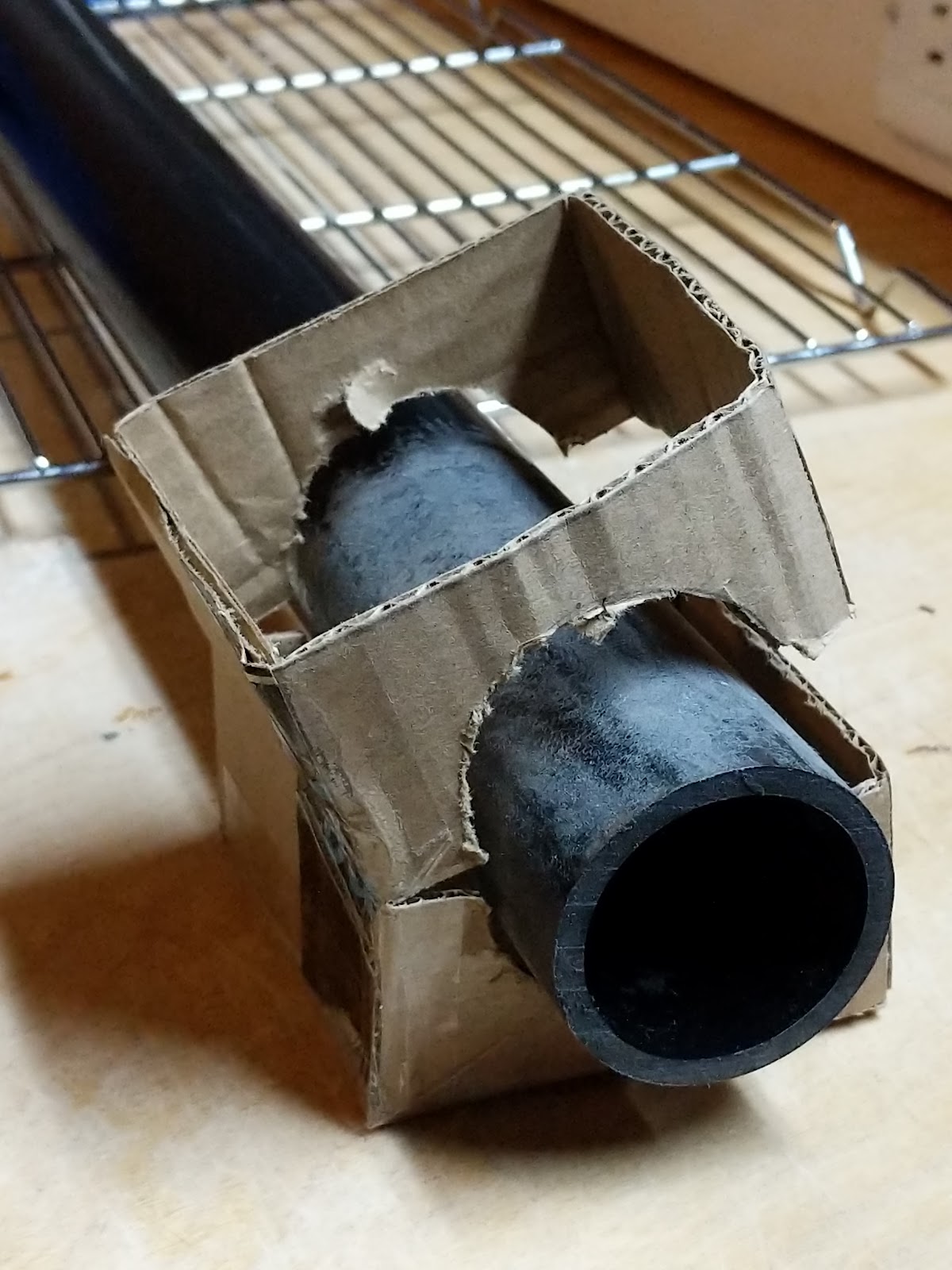


For the holes to accommodate the other legs (¾" PVC) of the tripod you can use two coupling joints or one corner joint. Modify the joint angle by cutting and trimming. Target angle is about 45-50 degrees. Use PVC cement to glue the pieces together. 

Above: two coupling joints cut at 22.5° and glued together


I made another cut on the coupling joints to improve the fit of the tripod joint 


The joint will be imbedded in epoxy on top of the large tripod section in the box. Before doing that, use sandpaper to roughen the part of the joint that will be imbedded.


 Add thickened epoxy to near the top of the box. Press in the corner joint at the desired angle (60-65 degrees). 


Above: Imbedded in epoxy are the sockets for the 2nd and 3rd legs of the tripod. The epoxy has graphite mixed in, so its color matches the tube.


A large mass such as seen here will get very hot, and in larger masses, hot enough to combust. I removed it to the front porch, just in case.


Preparing the tripod leg for the ball holder.


That ball holder is an aluminum square tube that fits loosely in the leg.


Sand the inside of the tube at the top for 2-3" down. Tape cardboard spacers to the aluminum tube so it fits snuggly in the tripod leg. 
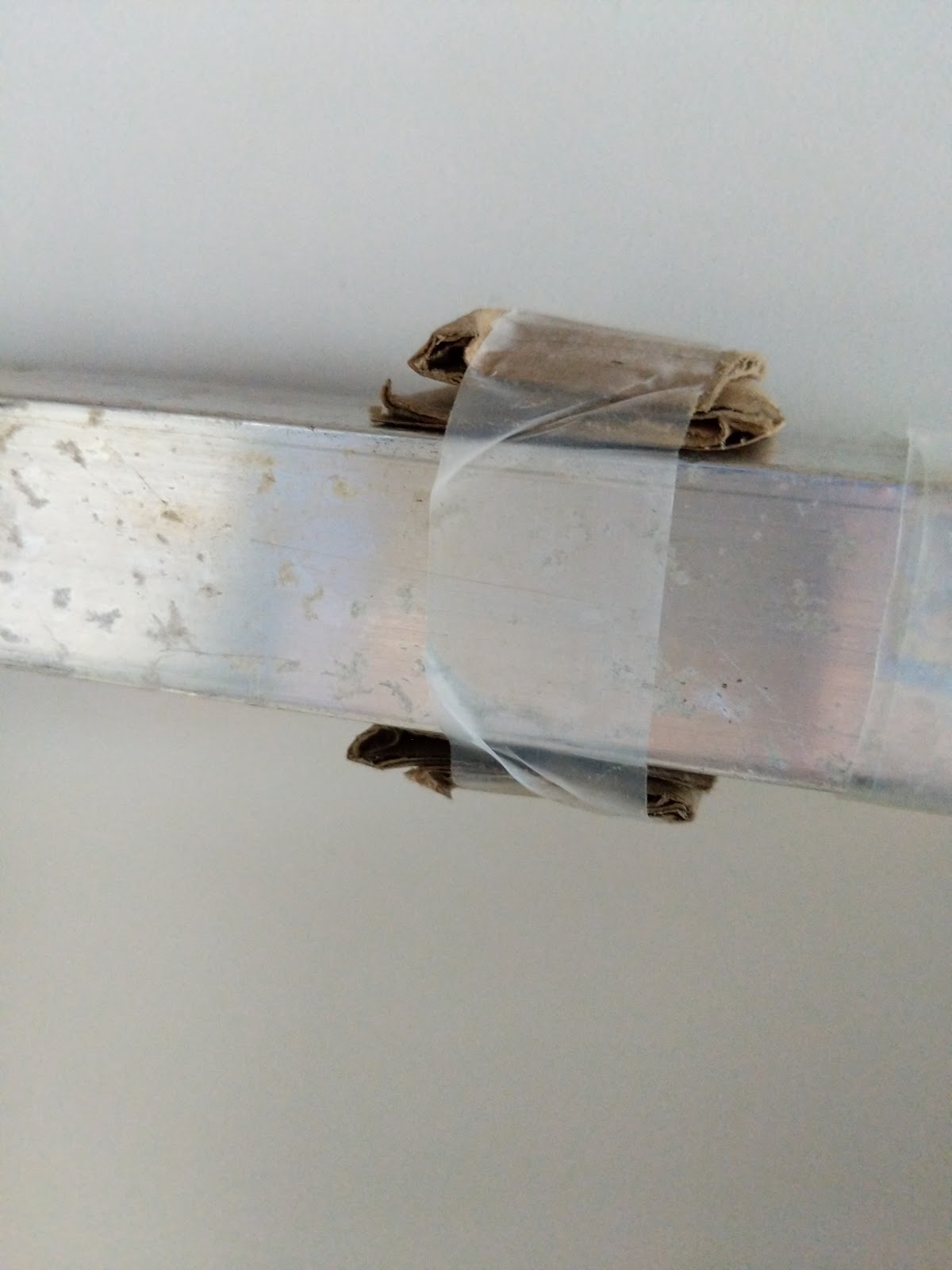

Next, a few layers of plastic bag go over the ball holder tube.
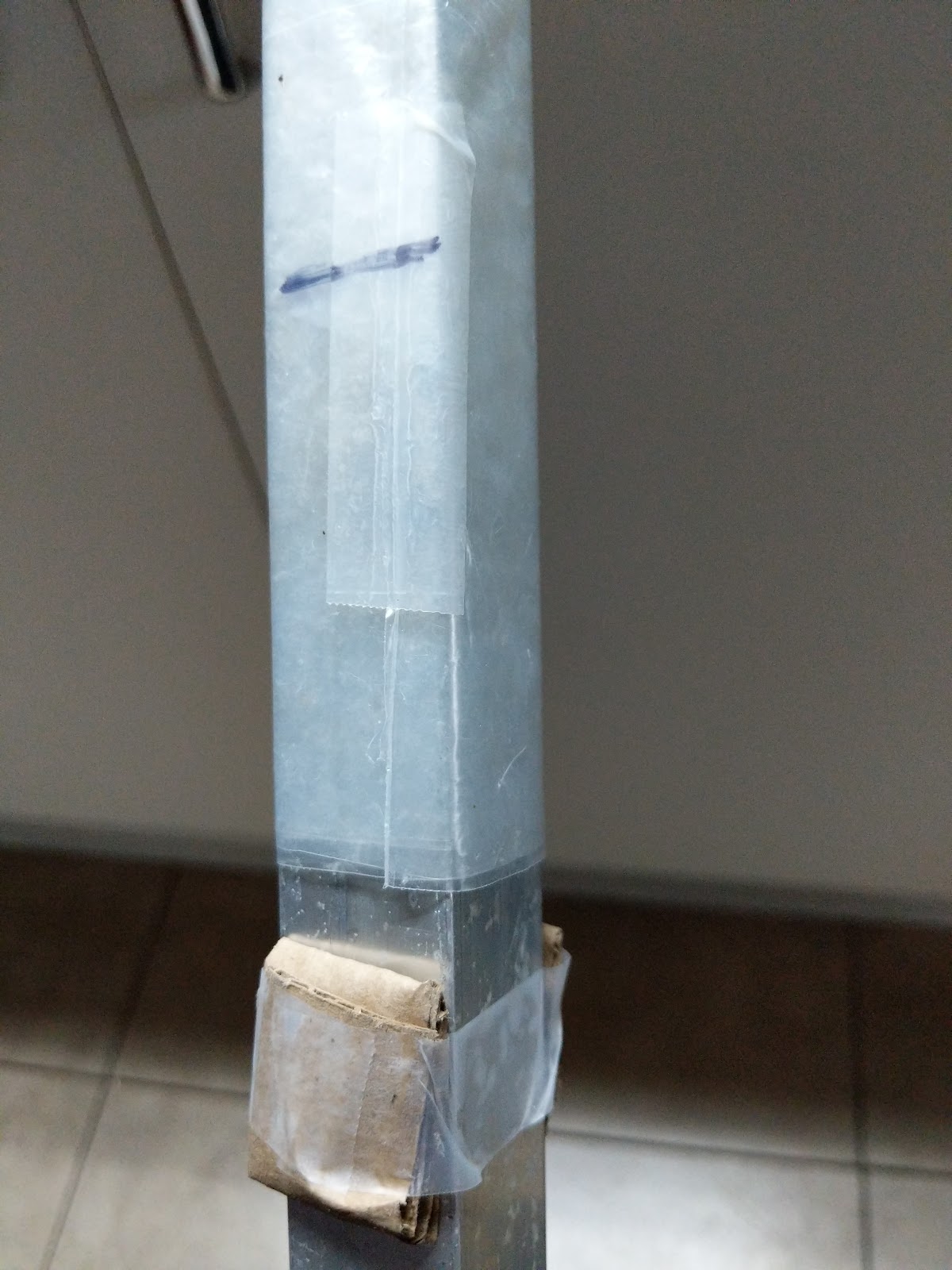
The  aluminum tube goes back into the large tripod leg with an inch or two of the plastic showing. Next, thickened epoxy goes into the gap between the plastic and the tripod leg. The ball holder tube should remove easily after the epoxy cures, leaving a square hole.


The small tripod legs need weight at the bottom to keep the Topspin Bro from moving after impact. For each leg I made a plastic lined paper sleeve about 8 inches long and about 1.5" square. I filled each with about 250-300g of epoxy. One collapsed into the yogurt container holding it. I advise the use of cardboard, not paper for the mold. Better yet, use a 500 ml disposable water bottle with the top cut off.


The tennis ball:  Wrap a 10" strip of paper around the ball. Mark the strip where it begins to overlap itself. Cut off and discard the part that overlaps. Hold the ends together and cut a notch as seen in the pictures below. Mark the ball with a sharpie. Holding the paper on the ball, center the end notches around the mark. Turn the ball and mark the ball through the center notch.

Above: the strip of paper wrapped around the ball and marked where the end touches.
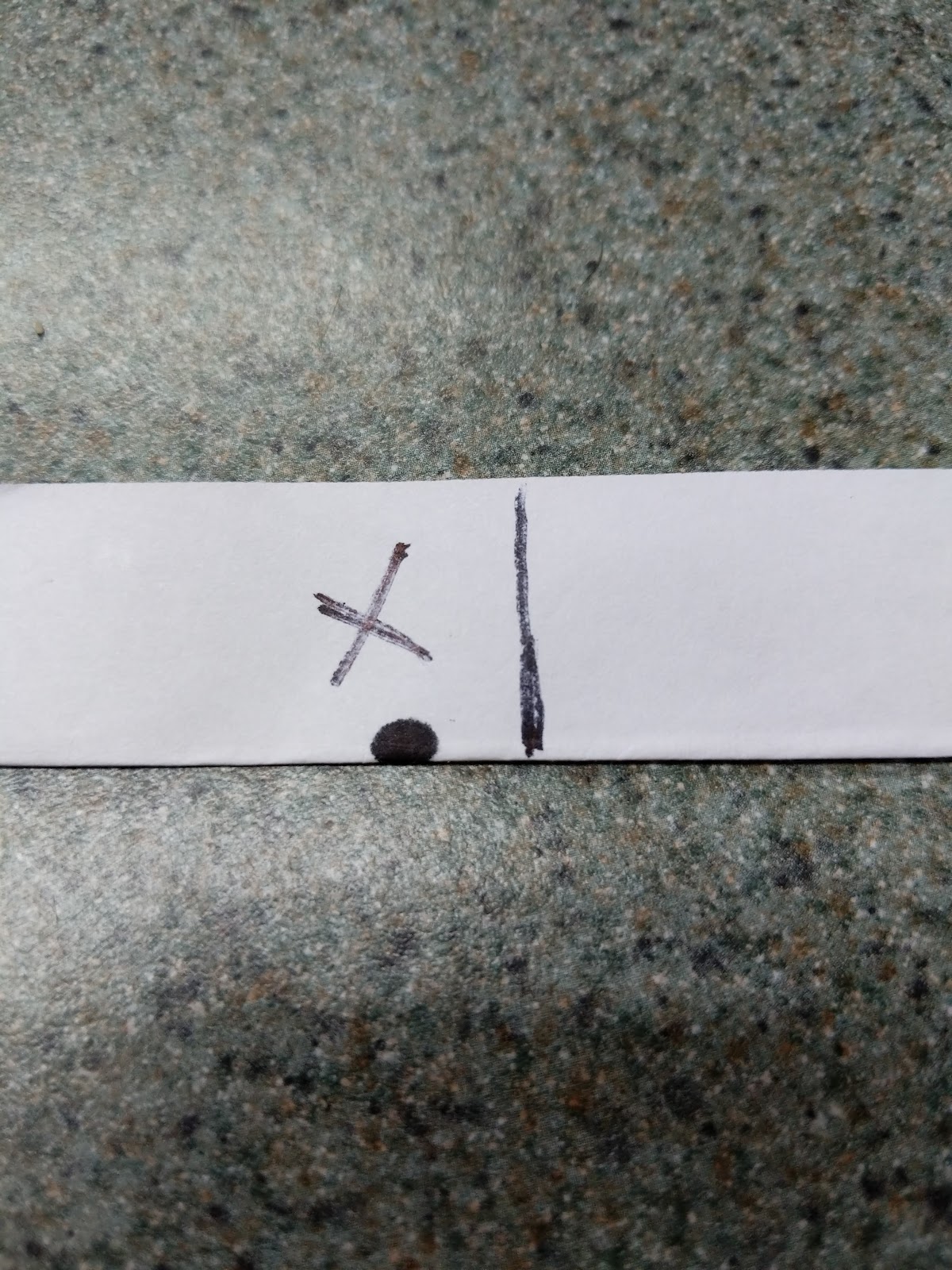

Above: "X" marks the section to cut away
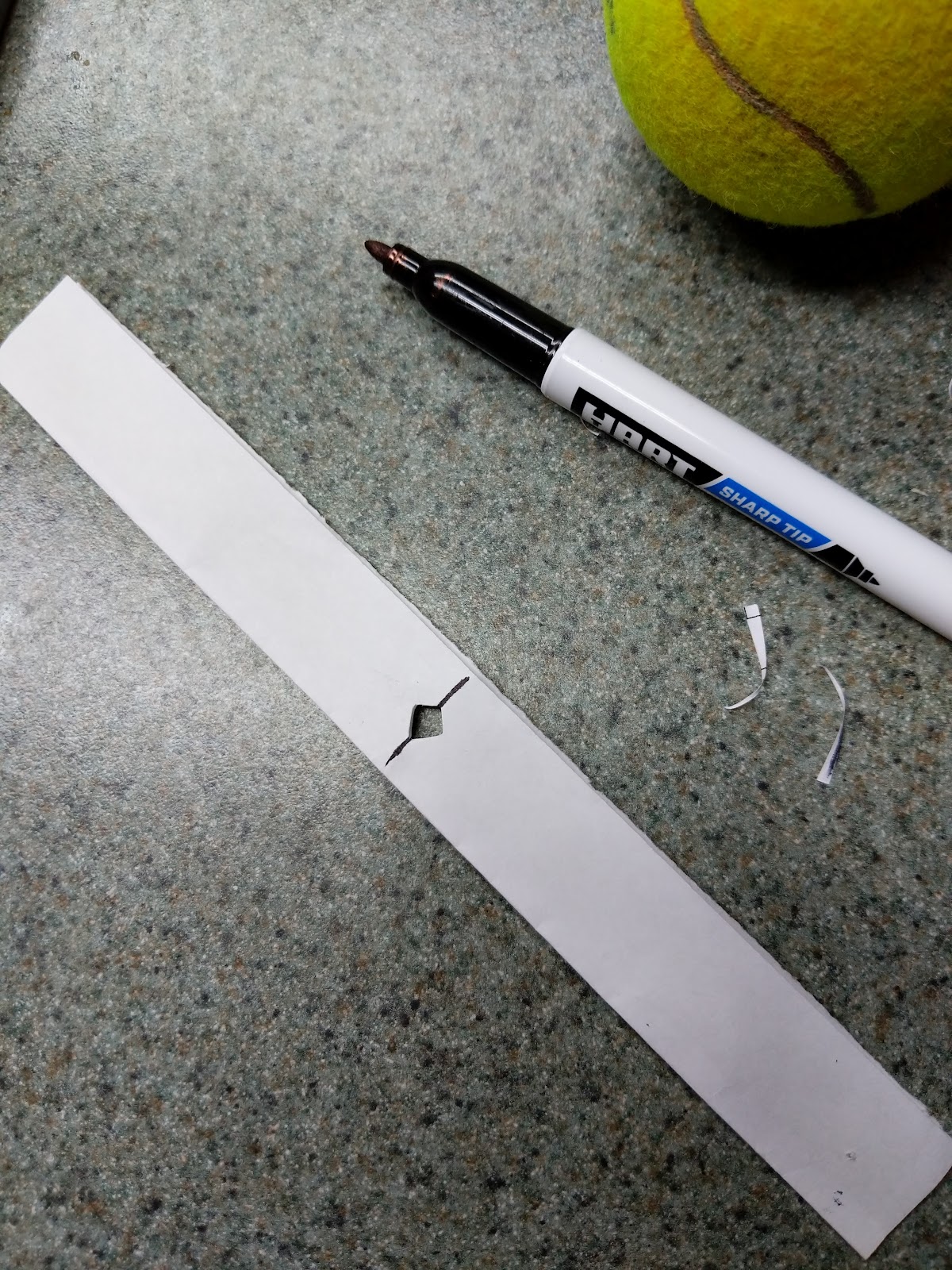
Above: I located the center by folding the strip in half and marking it. Then I cut a square hole at the fold.


Above: I notched the ends of the strip. Here it encircles a mark on the ball.


Above: This is the center mark. I marked it. To check my work, I turned the paper 90° and found the marks to land within the notches of the paper strip.


Check the locations of the marks by turning the paper 90°. Drill a ¼-5/16” hole at each mark. Find a metal or plastic tube that fits loosely over the business end of a 3-4" paint roller handle. Press the tube through the ball's holes and trim to fit the handle. Slide the ball onto the handle. It should spin easily with minimal wobble. If the handle doesn't come with an endcap to keep the ball in place, drill an undersized hole in a small flat of plastic and push onto the handle.

Noc
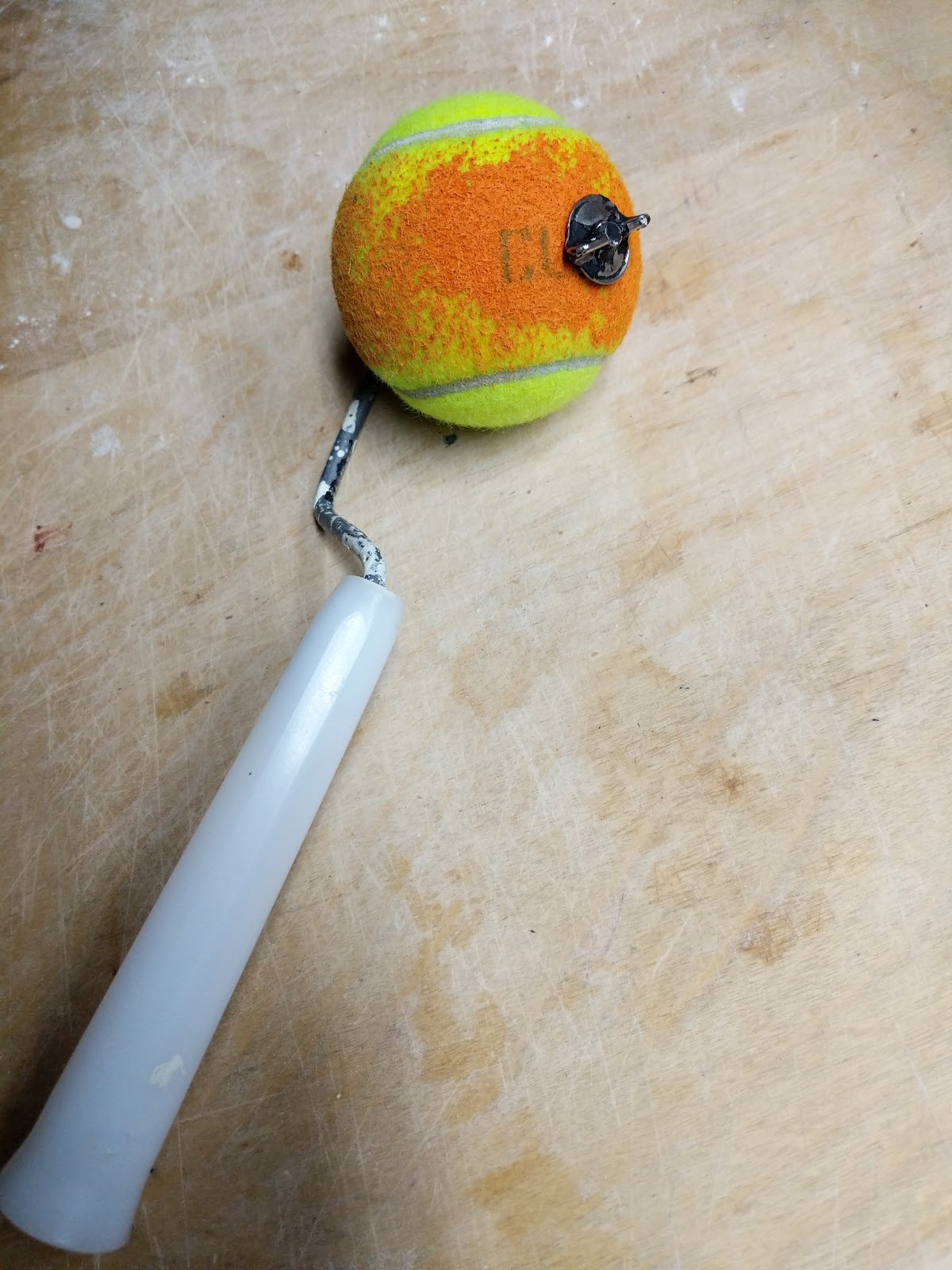
Attaching the ball holder to the sliding tube. Fabricating the ball holder bracket. I bent a 6” strip of steel to fit about the ball holder. Holes drilled to permit bolting onto the ball holder. A hole drilled in the handle of the ball holder and bolted to the sliding tube.


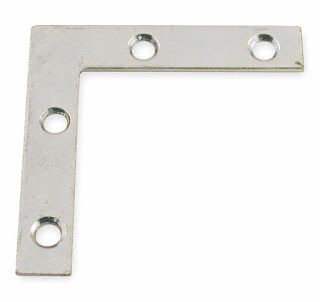
Above the ball holder bracket holds the paint roller handle. You could use a couple flat corner braces instead.
Above: flat corner brace:


Spring loading the ball holder. 3/32” shock cord, held in place passively by a bolt on both the sliding tube and there ball holder.


Height adjustment. You can make infinite adjustments with a 12 inch strip of cut inner tube wrapped and knotted around the sliding tube. It slides easily up and down, and prevents the tube from sliding into the leg.


The tripod’s detachable legs. Needed: ¾” PVC pipe and 2 coupling joints;PVC cement; drill/drill bits; 3/32” (or ⅛”) shock cord. Cement a coupling joint to the two PVC tripod legs. Drill a ⅛” (or 3/16”) hole at the top of those legs, starting at 90° to get the hole started and then pointing toward the open end of the coupling. Cut two 20” PVC pieces and insert each into the coupling joints. Start a ⅛” hole 8” below the joint and finish by pointing the drill toward joint. Cut 20”of shock cord. Push one end through the t upper hole and the other end through the lower hole. Pull the PVC leg away from the joint, exposing the ends of the shock cord. Pull the ends of the shock together, stretching the cord. Knot the ends of the cord. Move the knot to the bottom end.

Now that the legs are linked to the tripod, hitting the ball won't cause the legs to fall out.


Below, a picture of the tripod.
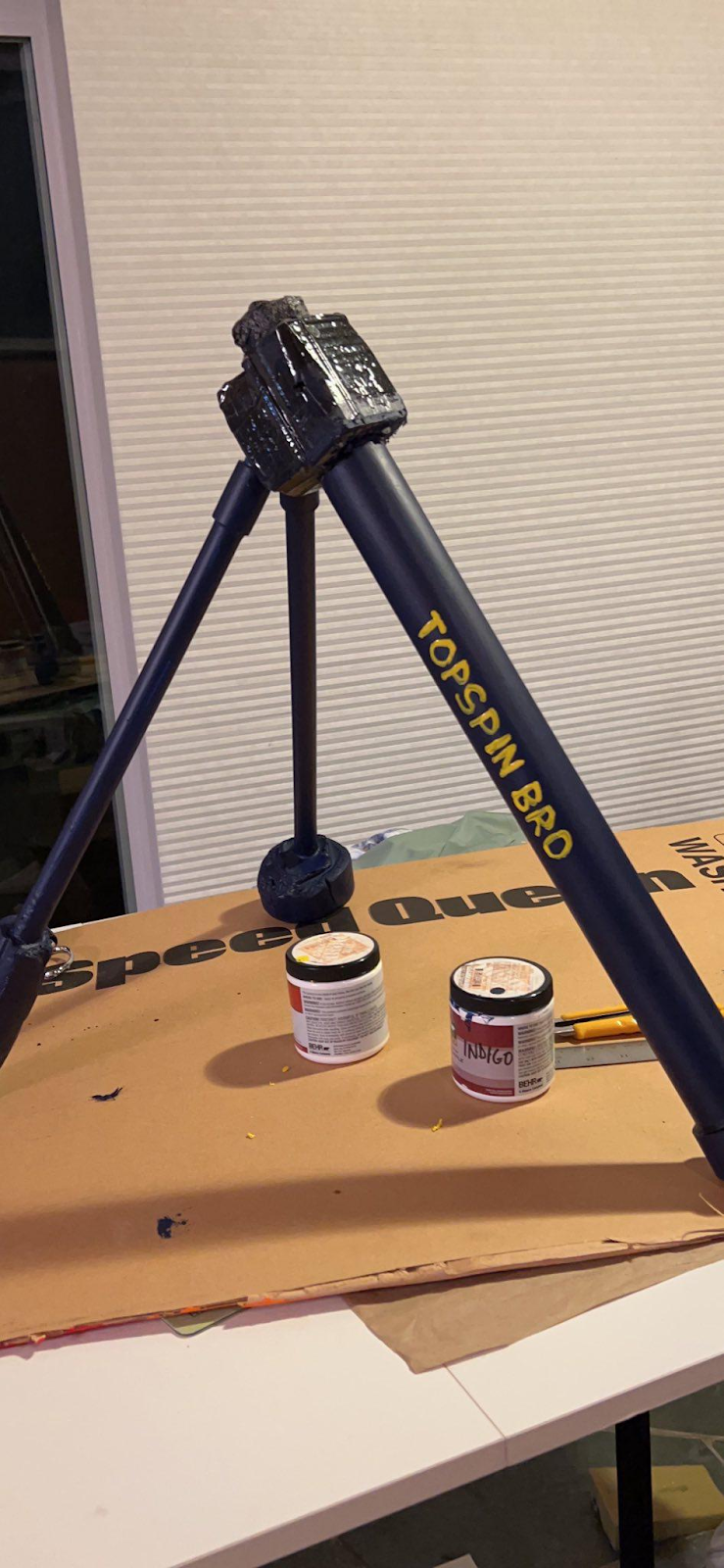

Below: the ball holder with shock cord attached
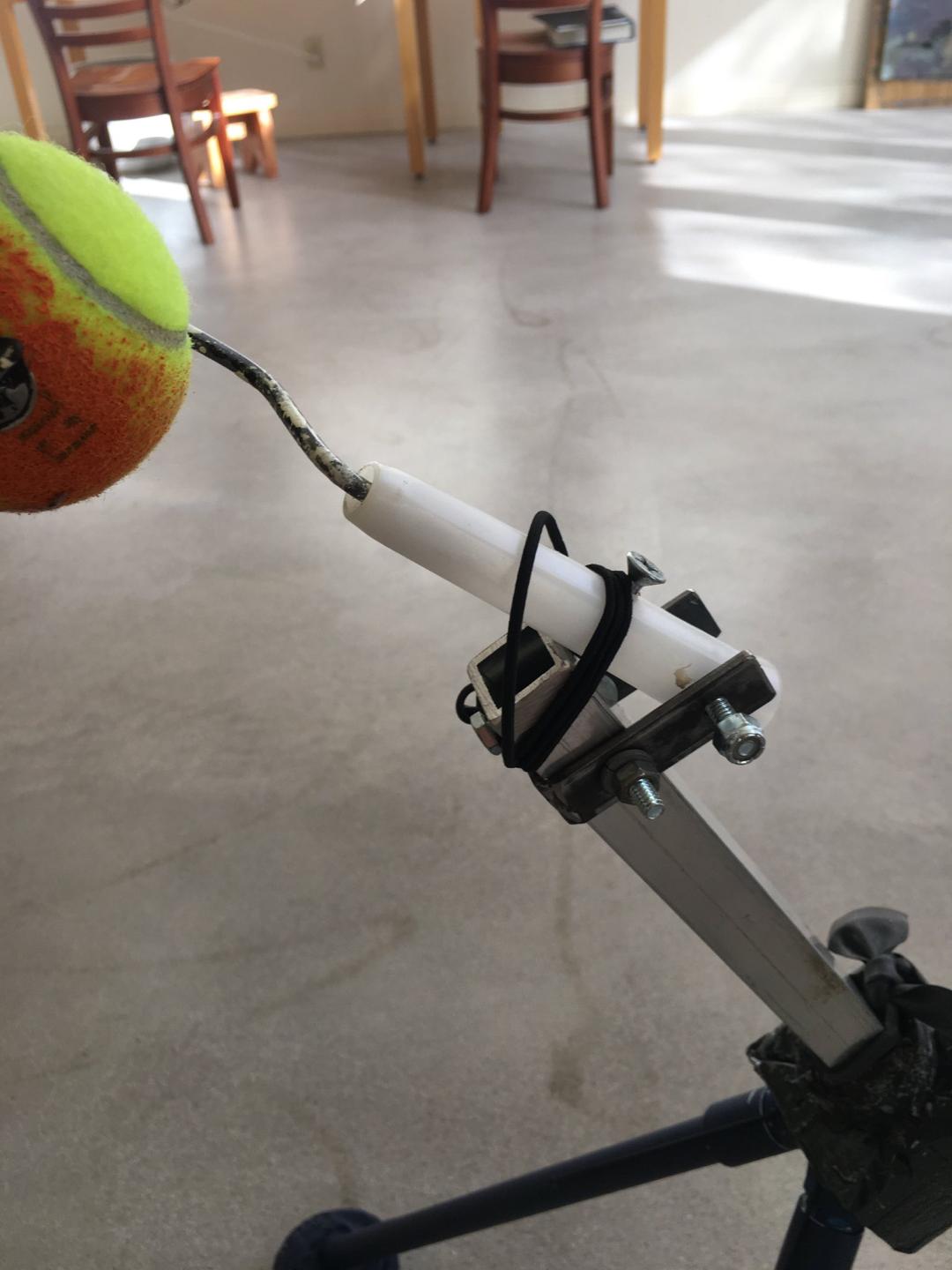


The completed thing